
MAN vs BABY (Netflix)
Luxury, tradition, and cultural meaning in movie-length Christmas entertainment
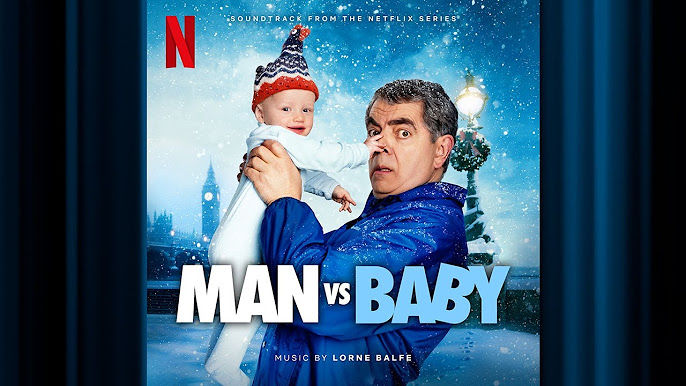
Case Study
Executive Summary
Netflix’s Man vs Baby demonstrates how movie-length Christmas entertainment can function as a powerful brand and cultural vehicle when luxury, heritage, and tradition are embedded through soft narrative integration rather than overt advertising.
By combining:
a universally accessible comedy format,
cross-generational appeal,
heritage luxury brands,
and Christian-rooted cultural symbolism,
The film becomes more than seasonal content. It operates as a yearly cultural ritual, reinforcing brand meaning, platform loyalty, and aspirational lifestyle values through subtle storytelling.
1. Context: Short → Long → Movie as a Marketing Ecosystem
Modern entertainment marketing operates across a format hierarchy:
Short-form captures attention
Long-form builds trust and familiarity
Movie-length content creates emotional meaning and cultural memory
Netflix deliberately positions Man vs Baby at the final and most powerful level of this funnel: movie-length entertainment.
Unlike short-form or episodic content, a Christmas movie:
is watched intentionally,
is often shared across generations,
and is revisited annually.
This makes it uniquely effective for long-term brand association.
2. Format Choice: Why a Christmas Comedy Works
Comedy as a Universal Language
Physical comedy, embodied by Rowan Atkinson, is:
culturally neutral,
language-independent,
safe for all ages.
This ensures global scalability while maintaining emotional warmth.
Christmas as a Cultural Multiplier
Christmas content follows different consumption rules:
Familiarity is preferred over novelty
Comfort outweighs innovation
Rewatchability drives value
The result is once-a-year visibility with long-term recall, a rarity in contemporary media.
3. Luxury, Tradition, and Heritage: Brand Presence Without Advertising
The film integrates luxury and heritage brands not as products to be sold, but as cultural signals.
Key Principle: Loud = Cheap, Quiet = Expensive
No brand in Man vs Baby:
explains itself,
interrupts the story,
or demands attention.
Instead, brands exist naturally within the narrative environment.
4. Brand Analysis: Meaning Through Narrative Use
Fortnum & Mason – Heritage as Care
Fortnum & Mason hampers are repurposed as a baby bed.
Implication:
Luxury equals trust
Heritage equals reliability
Celebration equals care
The brand shifts from gifting to protection, reinforcing intergenerational relevance.
Hermès – Permanence Over Disposability
Hermès is used as a diaper — but crucially, it is not thrown away. It is carefully stored in a bag on the terrace.
Implication:
True luxury is never a waste
Craftsmanship retains value even after use
Objects carry memory, not disposability
This reinforces Hermès’ core philosophy of longevity and respect for materials.
Dom Pérignon – Luxury as Emotional Regulation
Dom Pérignon is:
already present in the fridge,
included on the purchase list,
stored in quantity (2013 vintage, 24 bottles),
casually dismissed as “just an old champagne.”
The cork becomes a pacifier that calms the baby.
Implication:
Luxury is normalized, not exalted
Prestige survives understatement
True refinement stabilizes chaos rather than amplifying it
Dom Pérignon is repositioned from spectacle to emotional infrastructure.
Food Brands – Trust, Nostalgia, and Indulgence
HiPP baby food represents responsibility and trust
Cadbury Heroes represents nostalgia and emotional comfort
Gourmet foods represent imagination and abundance
Luxury food is not defined by price alone, but by contextual meaning.
5. Christianity and Cultural Values: Meaning at the Core
The film begins and ends with the Nativity story.
Narrative Framing
The baby is initially overlooked, placed on the stairs
He is later placed in a manger
At the end, baby Jesus is found in a stable-like space in the center of the house
Cultural Implications
Without preaching, the film reinforces core Christian-rooted values:
care for the vulnerable
humility over display
kindness over control
meaningful relationships over material excess
Luxury surrounds the story — but meaning remains simple.
6. Aspirational Living: Redefined
The aspiration presented in Man vs Baby is not perfection, wealth, or order.
It is:
a home where objects are used, not displayed
where tradition is lived, not performed
where luxury supports life instead of dominating it
This is aspirational normality, a powerful emotional positioning.
7. Strategic Outcomes
For Netflix
Increased seasonal retention
Brand warmth and family positioning
Annual content resurfacing with low marginal cost
For Luxury and Heritage Brands
Long-term cultural association
Global visibility without brand dilution
Reinforced values of longevity, trust, and tradition
For Audiences
Emotional comfort
Cultural familiarity
Meaningful, low-friction entertainment
8. Key Learnings
Movie-length Christmas content is uniquely powerful for brand mythology
Soft placement preserves luxury equity better than overt advertising
Tradition and heritage resonate more strongly when embedded in a narrative
Christianity-rooted values can be communicated culturally without ideology
The strongest brands are those confident enough to be quiet
Conclusion
Man vs Baby illustrates how entertainment can function as cultural infrastructure, not just content.
By aligning luxury brands, Christian-rooted values, and family-friendly comedy within a movie-length Christmas format, Netflix creates a product that is:
rewatchable,
emotionally resonant,
and commercially efficient.
In a world obsessed with immediacy and noise, Man vs Baby proves that meaning, like luxury, grows strongest when it is allowed to whisper.


Comments